
How Today’s Decisions Can Become Tomorrow’s Costs
A school building will outlast the bond that paid for it, the superintendent who approved it, and most of the people who designed it. The decisions made in the first six months of a project are the ones a maintenance team will live with for the next fifty years.
Over the decades that follow, thousands of students and staff will use their spaces, maintenance teams will adjust and adapt aging systems, and infrastructure will be tested in ways unimagined when the buildings were opened.
When envisioning a new facility and asking the public to invest bond dollars, the question the district and design team need to ask isn’t simply whether a facility can be built at that time; it’s whether the district can also operate, maintain and enhance it throughout its life. Expensive long-term problems rarely result from a single decision. More often, they stem from everyday conversations about site access, drainage, utilities, landscaping, visibility and maintainability – choices that seemed reasonable when the building was built but weren’t fully evaluated against how a campus would actually operate over time.
That life-cycle perspective guides every recommendation we make – from the earliest site evaluation through final design – because today’s design decisions become tomorrow’s operational realities.
Design for daily use – not just Day One
Many long-term operational problems can be traced to early decisions that experienced teams know to evaluate through the lens of daily use, maintenance and student behavior. The question is not simply whether an element can be installed or a layout works; it’s whether the district can safely supervise, maintain and operate that facility for the next thirty, forty or even fifty years. For example:
- A proposed building system may be technically appropriate yet still create operational challenges if maintenance requires closing hallways, interrupting instruction or bringing service personnel through secure student areas. What may meet performance requirements on Day One may become costly or difficult to clean, repair or replace over time.
- Loose ground-cover materials rarely stay where they are placed. Children love to kick, throw or carry them across campus (not to mention store in their pockets), where they can collect in walkways, enter buildings or clog drainage systems.
- Roof drains and site inlets must account for more than calculated water volume. A ball, shoe or piece of playground material can become an obstruction, making maintenance access just as important as hydraulic capacity.
- A tree near a playground may provide welcome shade while also creating a climbing opportunity or obstructing supervision. Parent queuing, bus circulation, pedestrian routes, fencing and sightlines may work on a site plan but create daily conflicts once the campus is occupied.
Designing for long-term performance starts with asking better questions. Every district operates differently, and experienced design teams know to engage facilities staff, administrators, maintenance personnel, transportation teams and security professionals early in the process. Those conversations often uncover operational realities that drawings alone cannot reveal, helping identify potential maintenance challenges before they become permanent features of the campus.
No two school districts operate exactly alike. Understanding how each campus functions day to day, and designing around those unique operational realities, is often what separates facilities that simply meet program requirements from those that continue serving students and staff efficiently for decades.
Work to figure out what’s already there
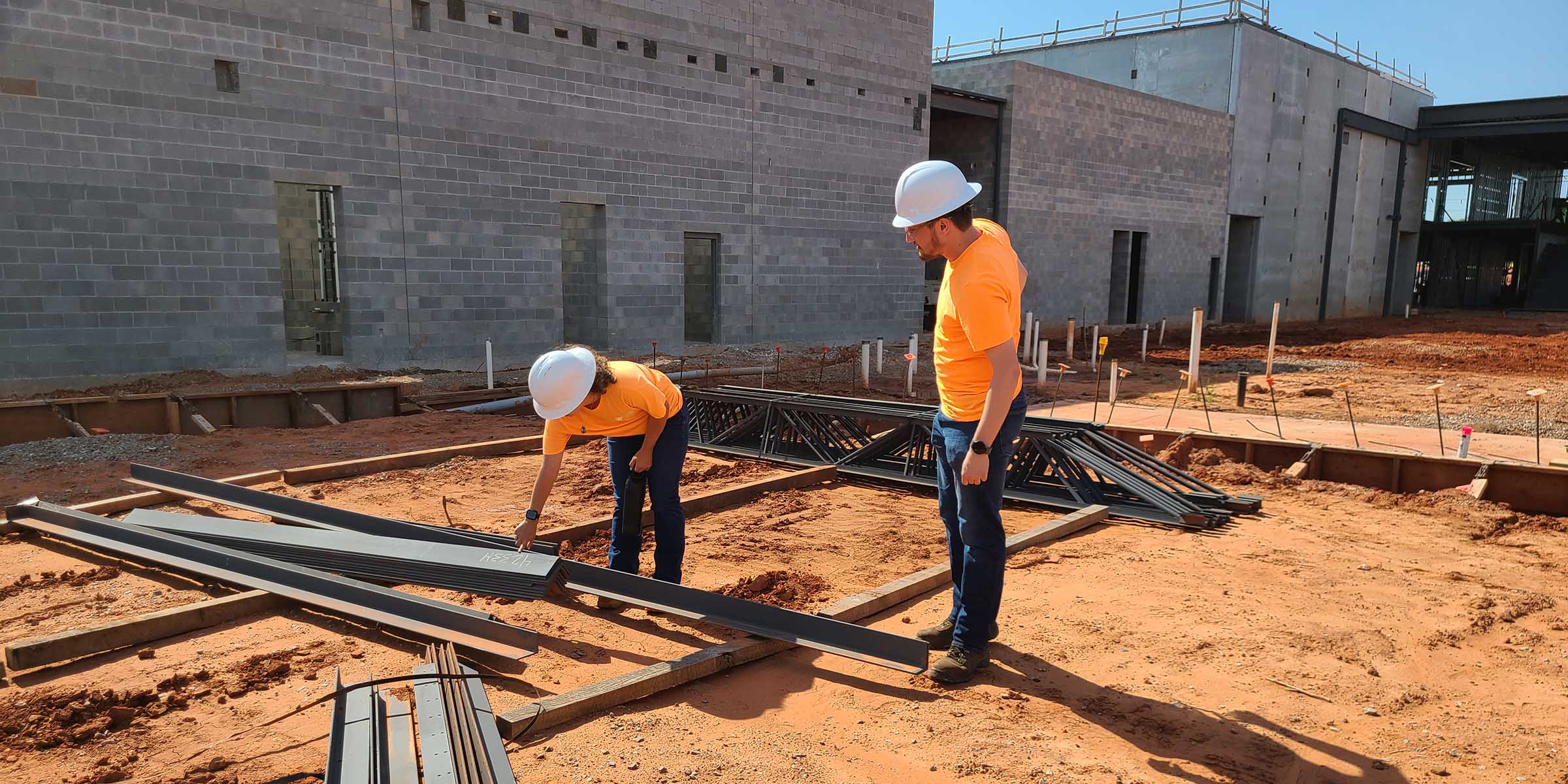
Renovations and additions to existing buildings present another layer of unique challenges. Every renovation begins with assumptions of existing systems. Assumptions must be investigated early and verified to reduce the number of surprises faced during construction.
- Renovating an older school means inheriting both its documented and undocumented history. Original drawings may not reflect every utility relocation, repair or modification completed over several decades. Underground lines may have been abandoned or rerouted, and systems that remain operational may be in worse condition than expected.
- Restoring gas service, for example, may require a full-building leak or pressure test. If the system fails, reconnection can be delayed while leaks are investigated and repaired. If scheduled during a school break, the work may have limited operational impact. Discovered after students return, however, it can disrupt heating, food service and other campus operations, and in some cases may require evacuation or a temporary shutdown.
- Subsurface conditions create similar challenges. While early investigation cannot identify every undocumented utility, it can reveal where uncertainty remains and help the project team build appropriate contingency into the schedule.
The evaluation should also extend beyond the immediate construction area. Shared utilities, adjacent buildings, emergency access, parent circulation, bus routes and contractor staging all influence how an occupied campus continues to function throughout construction.
No investigation can eliminate every surprise in an existing facility. The value of an experienced team is knowing where uncertainty is most likely to exist, which conditions should be verified early and how discoveries could affect the school’s schedule and operations. By identifying those risks, coordinating investigations and planning contingencies before construction begins, the project team can turn unknown conditions into manageable decisions rather than avoidable emergencies.
Experience changes the questions you ask
The value of experience is not simply knowing what has worked before. It is recognizing which details deserve closer attention, which assumptions need to be tested and which questions should be raised before routine decisions become costly realities. Questions an experienced design team should help a district answer include:
- What assumptions are we making about the existing building or site?
- Which existing conditions have been verified, and where does uncertainty remain?
- How might students interact with or misuse this space or feature?
- Can staff safely supervise and operate the space without adding workarounds?
- Can systems and equipment be inspected, cleaned, repaired and replaced while the school is occupied?
- Which design decisions could create recurring maintenance costs or operational disruptions?
- How will students, families, buses, service vehicles, contractors and emergency responders move safely and efficiently throughout the campus?
The most successful school projects do more than meet today’s program requirements – they continue serving students, educators and communities long after construction is complete. At Wallace Design Collective, we believe that begins by asking better questions early, understanding how each district operates and evaluating every decision through the lens of long-term performance. That’s how small design decisions become lasting value for the schools and communities we serve.